
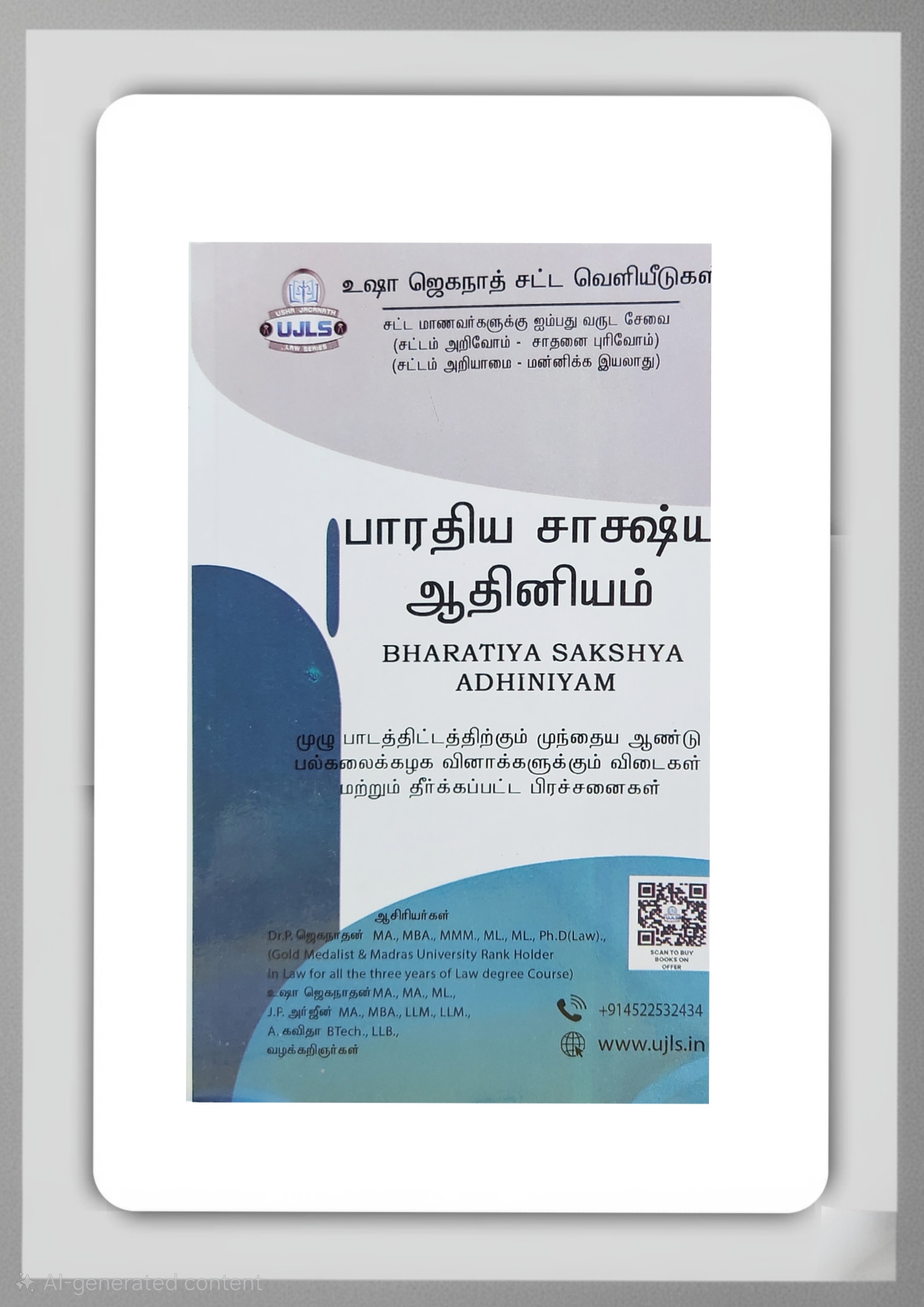
DESCRIPTION
It is the principal legislation governing the admissibility and evaluation of evidence in Indian courts.
Enacted by the Parliament of India, it officially replaced the colonial-era Indian Evidence Act, 1872, to modernize and streamline evidence laws for the digital age.
It is an act of the Parliament of India.
- Comprehensive Digital Evidence: It significantly expands the definition of documents to include electronic records, ensuring that e-mails, server logs, digital devices, and location data are fully recognized in court.
- Replaces Section 65B: The old Section 65B (which dealt with the admissibility of electronic records) has been revamped and streamlined as Section 63, simplifying the process of submitting electronic evidence.
- Secondary Evidence Clarification: It outlines precise conditions under which secondary copies (such as certified copies or mechanical reproductions) can be legally accepted in place of original documents.
- Streamlined Admissibility: The act updates the rules of relevancy, accomplice testimony, and dying declarations to make trial processes more efficient and technology-friendly.
ALSO
BUY BHARATIYA SAKSHYA ADHINIYAM TAMIL | BSA TAMIL | 2023 | தமிழ் | V MURUGAN | C. SITARAMAN & CO | BEST BOOK IN TAMIL |



Reviews
There are no reviews yet.