
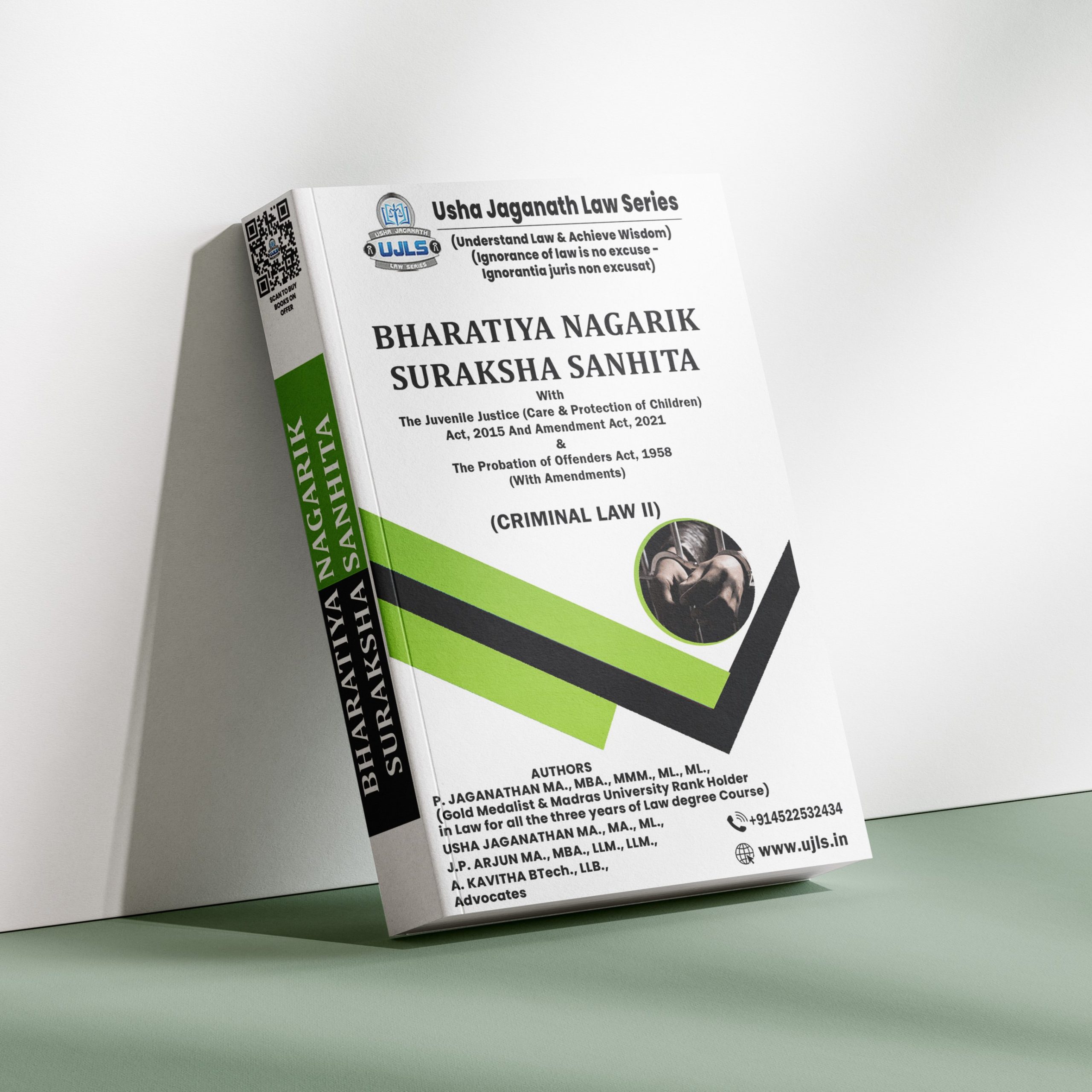
BUY Bharatiya Nagarik Suraksha Sanhita (Criminal Law II) | BNSS USHA GUIDE | USHA JAGANATHAN LAW SERIES GUIDE | ALL UNIVERSITY | BEST QUALITY | 1st EDITION |
Bharatiya Nagarik Suraksha Sanhita (BNSS), 2023 (IAST: Bhāratīya Nāgarik Surakśa Saṃhitā; ‘Indian Citizen Safety Code (ICSC), 2023‘), is the main legislation on procedure for administration of substantive criminal law in India.[1][2][3][4]
Background and timeline
- On 11 August 2023, Bharatiya Nagarik Suraksha Sanhita Bill, 2023 was introduced by Amit Shah, Minister of Home Affairs, in Lok Sabha.[5][6][7]
- On 12 December 2023, the Bharatiya Nagarik Suraksha Sanhita Bill, 2023, was withdrawn.
- On 12 December 2023 – 2024, the Bharatiya Nagarik Suraksha (Second) Sanhita Bill, 2023 was introduced in Lok Sabha.[8]
- On 20 December 2023, the Bharatiya Nagarik Suraksha (Second) Sanhita Bill, 2023 was passed in Lok Sabha.[9]
- On 21 December 2023, the Bharatiya Nagarik Suraksha (Second) Sanhita Bill, 2023 was passed in Rajya Sabha.
- On 25 December 2023, the Bharatiya Nagarik Suraksha (Second) Sanhita Bill, 2023 received the assent of the President of India.
Changes
The BNSS makes a number of changes to the CrPC, some key changes are:[13]
- Consolidating and simplifying the law: The BNSS consolidates and simplifies the law by repealing and amending a number of provisions of the CrPC.[14]
- Strengthening the rights of the accused: The BNSS strengthens the rights of the accused by providing for safeguards, such as the right to a lawyer of choice during interrogation, though not throughout the interrogation, and the right to a fair trial. Every police officer or other person arresting any person without warrant shall forthwith communicate to him full particulars of the offence for which he is arrested or other grounds for such arrest. When any person is arrested, he shall be examined by a medical officer in the service of the Central Government or a State Government, and in case the medical officer is not available, by a registered medical practitioner soon after the arrest is made.[15][non-primary source needed]
- Improving the efficiency of the criminal justice system: The BNSS seeks to improve the efficiency of the criminal justice system by streamlining procedures and reducing delays.
BNSS makes the ability of the accused to secure bail, more difficult and limits the scope for plea bargaining.[20] It empowers police officers to compel an accused to produce their digital devices to access their contents for investigation purposes. It also gives police the discretion to seize and attach the property of an accused before a trial has taken place.
BUY Bharatiya Nagarik Suraksha Sanhita (Criminal Law II) | BNSS USHA GUIDE | USHA JAGANATHAN LAW SERIES GUIDE | ALL UNIVERSITY | BEST QUALITY | 1st EDITION |
The following are some of the key changes made in the BNSS:
- Arrest: The BNSS expands the grounds for arrest and allows for arrest without a warrant in a wider range of cases.
- Investigation: The BNSS gives the police more powers to investigate crimes and requires them to complete investigations within a specified time period.
- Trial: The BNSS streamlines the trial process and requires courts to dispose of cases within a specified time period.
Criticism
BNSS makes the ability of the accused to secure bail, more difficult and limits the scope for plea bargaining. It empowers police officers to compel an accused to produce their digital devices to access their contents for investigation purposes. It also gives police the discretion to seize and attach the property of an accused before a trial has taken place.
ALSO

Reviews
There are no reviews yet.