
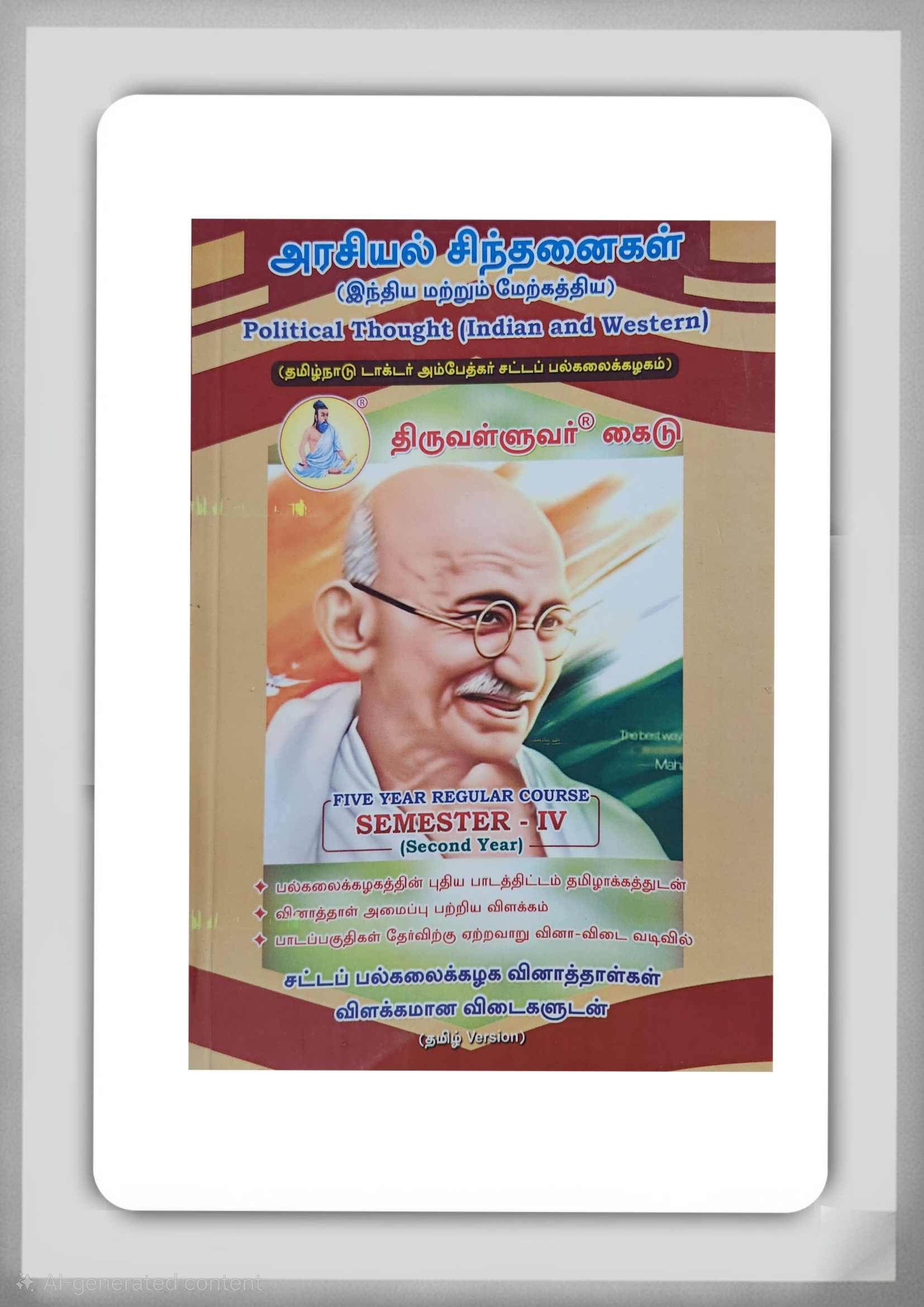
BUY POLITICAL THOUGHT THIRUVALLUVAR TAMIL| அரசியல் சிந்தனைகள் திருவள்ளுவர்| 2025 | LATEST EDITION | BEST GUIDE IN TAMIL|
தமிழில் அரசியல் தொடர்பாக திருக்குறளில் பல தலைப்புகளில் விவரிக்கப்பட்டுள்ளன. அறம், பொருள், இன்பம் என அறியப்படும் முப்பாலிலே பொருட்பாலில் அரசியல் பற்றி இறை மாட்சி தொடங்கி இடுக்கண் அழியாமை வரையிலான இருபத்தைந்து தலைப்புகளில் இரு நூற்றைம்பது குறள் கவிதைகள் பல நுட்பமான செய்திகளை நமக்கு அறிவிக்கின்றன.
அவை மட்டுமன்றி பொருட்பாலிலே அமைந்துள்ள அமைச்சியல்,அரணியல், கூழியல், படையியல், நட்பியல், குடியியல் என ஆறு இயல்களில் இயற்றப்பட்டுள்ள நாற்பத்தைந்து தலைப்புகளில் நானூற்று ஐம்பது குறள் கவிதைகள் கூறுவதும் அரசியல் தத்துவம்தான்.
தொல்காப்பியக்காலம் தொடங்கி திருக்குறள் காலம் தாண்டி ஏறக்குறைய இரண்டாயிரம் ஆண்டுகளுக்குப் பிறகும் தமிழில் அரசியல் தத்துவம் எதுவும் படைக்கப்படவில்லை.
இந்த நிலையில் 2010 சூன் மாதம் தமிழ்மண் இதழில் தொல்.திருமாவளவன் அமைப்பாய்த் திரள்வோம் என்கிற அரசியல் தத்துவத் தொடரை எழுதத்தொடங்கி இந்த சனவரி 2014 வரை நாற்பது தலைப்புகளில் முதல் பாகத்தை முடித்திருக்கின்றார். பல அரசியல் தத்துவ நூல்கள் தமிழில் அறிமுகப் படுத்தப் பட்டிருந்த போதும், தமிழில் நவீன காலத்தில் எழுதத்தொடங்கப் பட்டிருக்கின்ற முதல் தமிழ் மூல நூலாகும்.
Indian political philosophy in ancient times demarcated a clear distinction between (1) nation and state (2) religion and state. The constitutions of Hindu states evolved over time and were based on political and legal treatises and prevalent social institutions.
The institutions of state were broadly divided into governance, diplomacy, administration, defense, law and order. Mantranga, the principal governing body of these states, consisted of the King, Prime Minister, Commander in chief of army, and Chief Priest of the King. The Prime Minister headed the committee of ministers along with head of executive (Maha Amatya).
Chanakya was a 4th-century BC Indian political philosopher.[18] The Arthashastra provides an account of the science of politics for a wise ruler, policies for foreign affairs and wars, the system of a spy state and surveillance and economic stability of the state.[19] Chanakya quotes several authorities including Bruhaspati, Ushanas, Prachetasa Manu, Parasara, and Ambi, and described himself as a descendant of a lineage of political philosophers, with his father Chanaka being his immediate predecessor.[20]
Another influential extant Indian treatise on political philosophy is the Sukra Neeti.[21][22] An example of a code of law in ancient India is the Manusmṛti or Laws of Manu.[23] Chanakya also offered practical advice on how to run government.
He also believed that virtue in the leader and the merit of their advisers were important.[24] Furthermore, he also argued that the end justifies the means, and that after using the best means available to defeat their enemies, rulers should “substitute [their] virtues for the defeated enemy’s vices, and where the enemy was good [they] shall be twice as good”.[25] Prior to him, Manu wrote about similar topics in his Manusmriti.
During the Renaissance secular political philosophy began to emerge after about a century of theological political thought in Europe. One of the most influential works during this burgeoning period was Niccolò Machiavelli‘s The Prince, written around 1513 and published posthumously in 1532, after Machiavelli’s death.
That work, as well as The Discourses, a rigorous analysis of classical antiquity, did much to influence modern political thought in the West. Though the work was written for the Medici family in order to perhaps influence them to free him from exile, Machiavelli supported the Republic of Florence rather than the principate of the Medici family. At any rate, Machiavelli presents a rather novel and controversial view of politics, whereby he acquisition and maintenance of absolute royal power are determined by a prince’s ability to forgo the moral virtues.[42][43]
his other major work, The Discourses on Livy, focused mainly on republican statecraft, and his recommendations for a well ordered republic. Machiavelli noted how free republics have power structures that are better than principalities. He also notes how advantageous a government by a republic could be as opposed to just a single ruler.
Machiavelli’s more controversial statements on politics can also be found even in his other works.[44][45] For example, Machiavelli notes that sometimes extraordinary means, such as violence, can be used in re-ordering a corrupt city.[46] In one area, he excuses the actions of Romulus, who murdered his brother and co-ruler in order to have power by himself to found the city of Rome with laws fit for a free society.[47] Thomas Hobbes, well known for his theory of the social contract, goes on to expand this view at the start of the 17th century during the English Renaissance.
ALSO


Reviews
There are no reviews yet.