
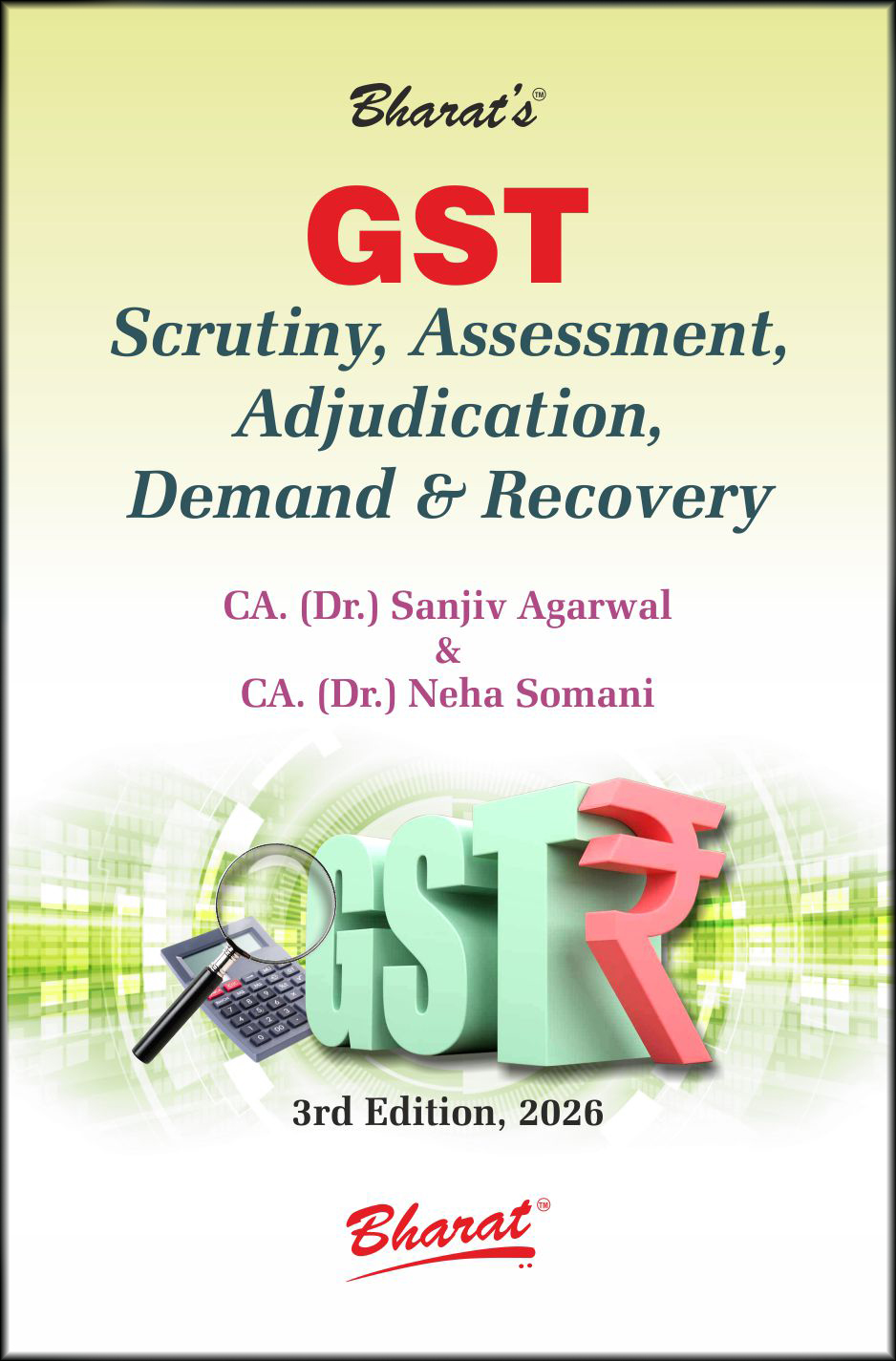
G S T Scrutiny, Assessment, Adjudication, Demand AND Recovery | BHARAT LAW HOUSE | 3RD EDITION | 2026 | LATEST EDITION | BEST BOOK |
About G S T Scrutiny, Assessment, Adjudication, Demand & Recovery
| Chapter 1 GST in India — An Overview
Chapter 2 Scrutiny, Assessment, Adjudication, Demand and Recovery: Legal Framework Chapter 3 Legal Terminology and Principles of Interpretation Chapter 4 Scrutiny of Returns Chapter 5 Assessment under GST Chapter 6 Adjudication of Demand Chapter 7 Demand and Recovery Chapter 8 Liability to Pay Tax in Certain Cases Chapter 9 Miscellaneous Provisions Applicable to Assessment etc. Chapter 10 Authorized Representative and GST Practitioners Chapter 11 Amnesty/Waiver Scheme under Section 128A Appendix 1 Meaning of Important Legal Maxims Appendix 2 Abbreviations. The Goods and Services Tax (GST) is an indirect tax introduced in India on 1 July 2017, replacing a range of pre-existing taxes like VAT, service tax, central excise duty, entertainment tax, and octroi. GST unified the country’s tax structure, simplifying the taxation of goods and services and eliminating the need for multiple taxes previously levied by both central and state governments. GST is a comprehensive, multistage, and destination-based tax. It is considered comprehensive because it has replaced most indirect taxes, with a few exceptions for state taxes. The tax is multi-staged as it is levied at every stage of the production process, but is refunded to all parties involved, except the final consumer. Its destination-based nature means that the tax is collected at the point of consumption, rather than at the point of origin, marking a significant departure from previous tax systems. The tax came into effect from 1 July 2017 through the implementation of the One Hundred and First Amendment to the Constitution of India by the Government of India. 1 July is celebrated as GST Day.[1] GST was initially structured with multiple tax slabs—0%, 5%, 12%, 18%, 28%, and 40%. However, certain goods such as petroleum products, alcoholic beverages, and electricity were excluded from GST and continued to be taxed separately by state governments under the previous tax system.[2] Additionally, specific items like rough precious and semi-precious stones attracted a special rate of 0.25%, while gold was taxed at 3%. Acess of 22% or other rates applied on top of the 28% GST for certain luxury items such as aerated drinks, luxury cars, and tobacco products.[4] Preceding the implementation of GST, the statutory tax rate for most goods was approximately 26.5%, with post-GST rates generally falling in the 18% range. In a move to stimulate consumption amidst lagging consumer spending and stagnant wages and to mitigate the potential impact of tariffs imposed by the second Trump administration, the Indian government announced a significant reduction in GST rates on several goods on 3 September 2025. These changes, which came into effect on 22 September 2025, reduced the number of GST slabs from six to three, consolidating them into just two primary rates: 5% and 18%. This restructuring aimed to simplify the tax system and make goods more affordable to consumers.[5] The tax rates, rules and regulations are governed by the GST Council which consists of the finance ministers of the central government and all the states. The establishment of the GST, or, more precisely, its implementation, has received significant criticism.[6][7] Positive outcomes of the GST includes the reduction in travel time in interstate movement, which the Ministry of Road Transport and Highways claims dropped by 20% owing to the disbanding of interstate check posts.[8] HistoryFormationThe reform of India’s indirect tax regime was initiated in 1986 by V. P. Singh, the Finance Minister in Rajiv Gandhi’s government, with the introduction of the Modified Value Added Tax (MODVAT). Subsequently, Prime Minister P. V. Narasimha Rao and the Finance Minister Manmohan Singh initiated preliminary discussions on a Value Added Tax (VAT) at the state level. A single common Goods and Services Tax (GST) was proposed and endorsed in 1999 during a meeting between the Prime Minister Atal Bihari Vajpayee and his economic advisory panel, which comprised three former RBI governors I. G. Patel, Bimal Jalan and C. Rangarajan. Vajpayee set up a committee headed by the Ministry of Finance of West Bengal, helmed by Asim Dasgupta, to design a GST model. ALSO
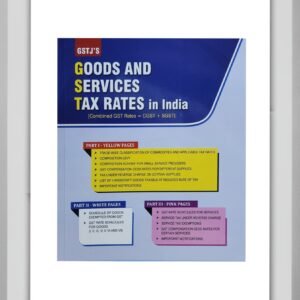
GOODS AND SERVICE TAXES RATES IN INDIA | GST TAX RATES | INDIA | COMBINED GST RATES | 2026 | GSTJ’S | 9TH EDITION | LATEST EDITION| BEST PUBLICATION |
|
Reviews
There are no reviews yet.